EU mandates total crypto isolation for Russia and Belarus
The European Union has enacted its twentieth sanctions package against Russia, implementing a total sectoral ban on cryptocurrency providers and platforms established within the federation. The measures extend to Belarus and specifically target the infrastructure used to move value outside of tradit

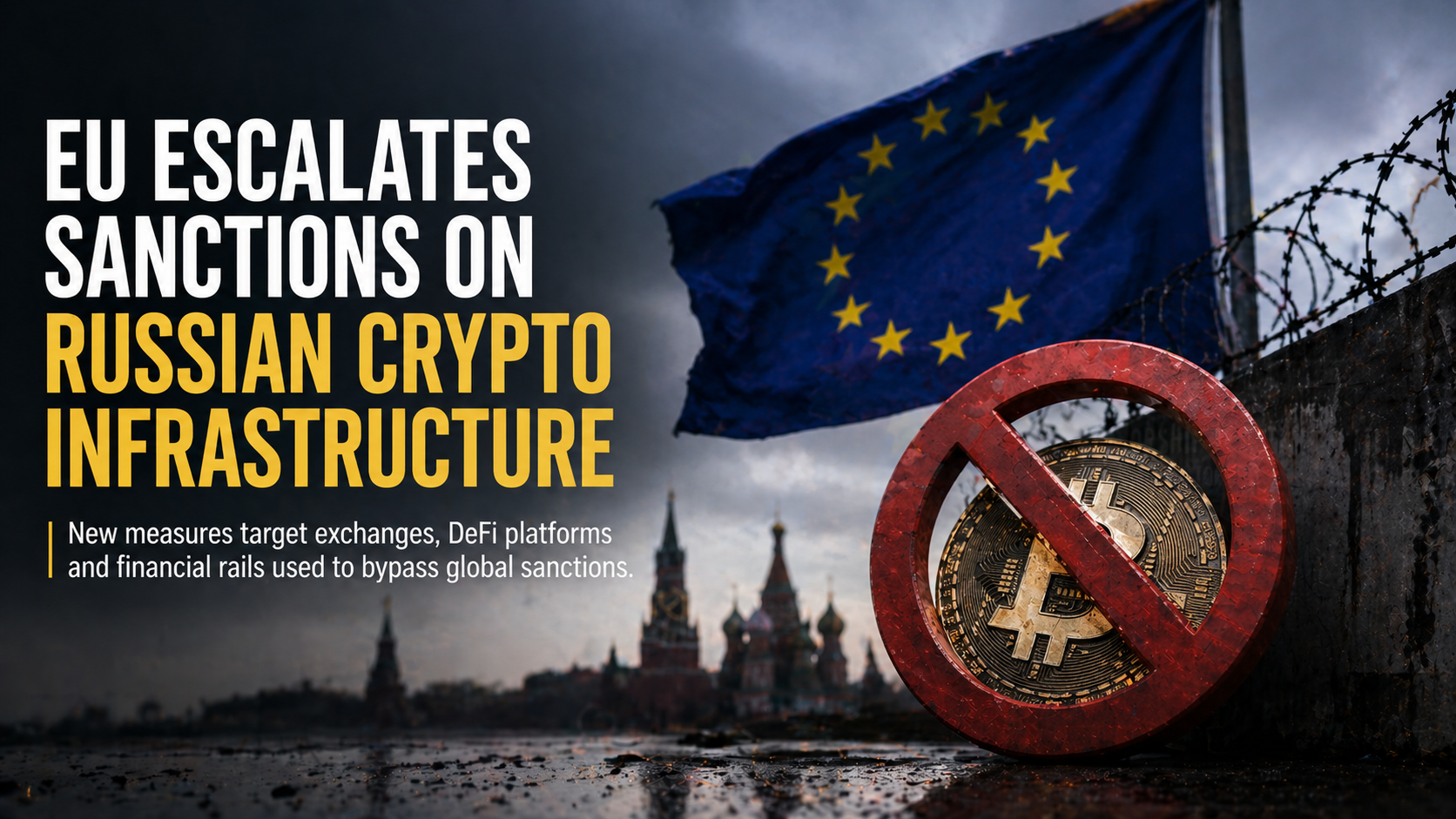
The European Union has enacted its twentieth sanctions package against Russia, implementing a total sectoral ban on cryptocurrency providers and platforms established within the federation. The measures extend to Belarus and specifically target the infrastructure used to move value outside of traditional banking corridors. Under the new rules, EU residents are prohibited from transacting with Russian or Belarusian crypto exchanges and decentralised finance platforms. The mandate also blocks the digital ruble, the RUBx stablecoin, and any technical support for Russia’s central bank digital currency development.
This escalation targets the SPFS messaging network, which serves as the Russian alternative to SWIFT, alongside twenty banks and several third-country institutions. The Kyrgyz exchange TengriCoin has also been blacklisted due to its role in facilitating trades for the A7A5 stablecoin, a government-backed asset that has reportedly processed over 119 billion dollars in settlement volume. By restricting regulated entities from providing services under the Markets in Crypto-Assets Regulation to these jurisdictions, the EU aims to close the liquidity gateways that have allowed sanctioned entities to maintain global financial connectivity.
The enforcement of these measures highlights the inherent fragility of custodial and regulated crypto services. When a platform is established within a specific jurisdiction, it remains subject to the political will of that state or the external pressures of international blocs. The ban on interacting with specific decentralised finance protocols further demonstrates that the interface layer, often hosted on centralised web servers or managed by identifiable legal entities, remains a primary point of failure. These sanctions do not merely target individuals, they target the rails themselves, proving that any system relying on intermediary trust can be frozen by administrative decree.
For the sovereign individual, this serves as a reminder that regulated service providers are extensions of the state financial apparatus. True censorship resistance is only found in protocols where the keys remain with the user and the network logic is indifferent to the geographic location of the participant. If a third party can be compelled to block your transaction, you are not using a neutral tool, you are using a permissioned database.
---
Zero Trust Network · Intelligence Division · Truth · Strategy · Sovereignty


Discussion