Circle Intervenes as Aave USDC Liquidity Reaches Total Exhaustion
The USDC liquidity pool on Aave V3 Ethereum Core has reached a state of total exhaustion, with utilisation pinned at 99.87 percent for four consecutive days. Following the KelpDAO exploit on 18 April, the pool has effectively ceased to function as a liquid market. Currently, 1.89 billion dollars in

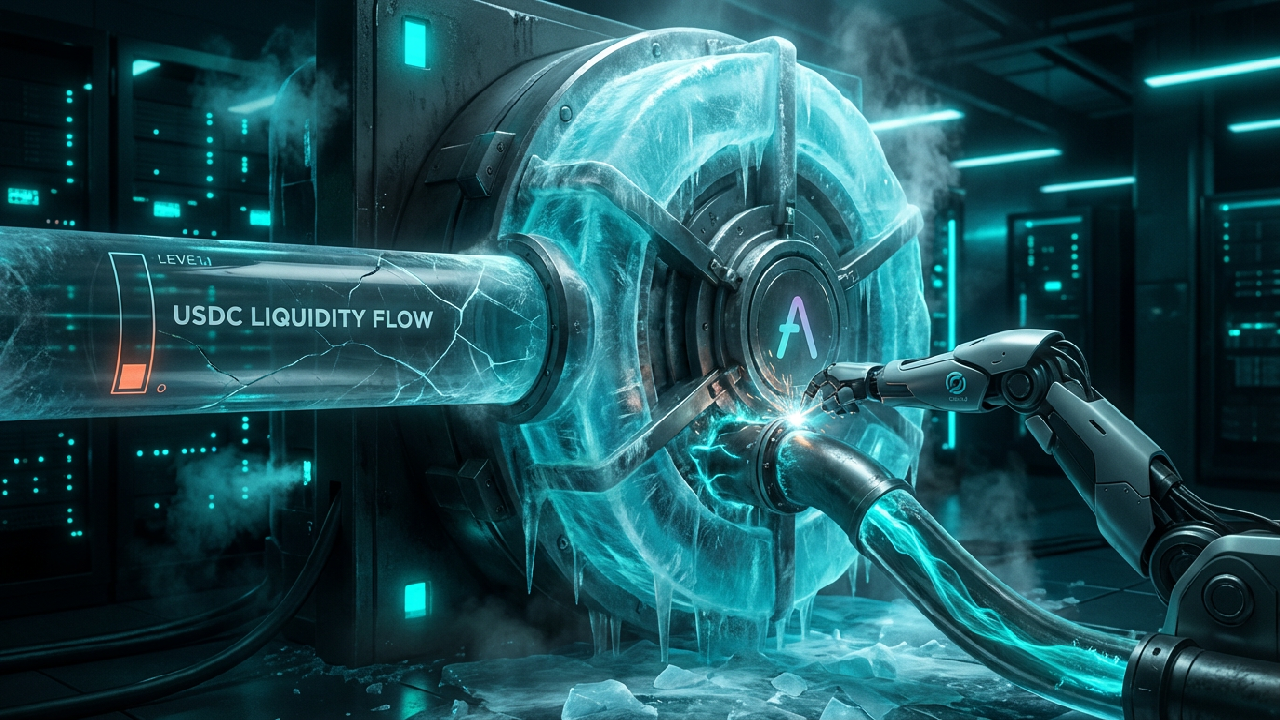
The USDC liquidity pool on Aave V3 Ethereum Core has reached a state of total exhaustion, with utilisation pinned at 99.87 percent for four consecutive days. Following the KelpDAO exploit on 18 April, the pool has effectively ceased to function as a liquid market. Currently, 1.89 billion dollars in supply is offset by an equal amount in borrows, leaving less than 3 million dollars available for withdrawals. Circle, the issuer of the underlying asset, has now intervened with an emergency proposal to force the market back into equilibrium by drastically increasing interest rates.
This failure highlights the fragility of algorithmic interest rate models when faced with systemic stress. The current mechanism, which caps borrow rates at approximately 14 percent, has failed to incentivise repayments or attract new capital. Circle argues that borrowers are currently using these loans as a cheap mechanism to bypass queues and exit trapped positions, making them indifferent to the current cost of capital. To break this deadlock, Circle proposes raising the interest rate slope immediately, pushing the maximum supply rate from 12.6 percent to over 48 percent. This is a manual override of a system that was designed to be autonomous.
The situation exposes a fundamental trust assumption in decentralised lending protocols: the belief that parameters can always find a clearing price. When utilisation hits 100 percent, the protocol effectively freezes, and the sovereignty of the depositor is lost. You cannot withdraw your assets because the smart contract has lent them all out, and the current incentives are insufficient to force their return. The reliance on a Risk Steward to manually adjust these parameters further demonstrates that, in times of crisis, the system reverts to a managed state rather than a purely code-driven one.
Furthermore, Circle has recommended pausing the automated risk oracle for this pool, citing its failure to respond correctly during previous volatility events. This admission confirms that the automated safeguards intended to protect the pool are insufficient, requiring the asset issuer to step in and dictate terms to the protocol. When the math fails, the human layer takes over, and the illusion of a trustless market dissolves.
Zero Trust requires acknowledging that any pool with a utilisation cap is a potential trap. If you do not control the exit conditions, you do not truly hold the keys to your liquidity. Real sovereignty in DeFi requires protocols that cannot be frozen by the inertia of their own interest rate curves.
---
Zero Trust Network · Intelligence Division · Truth · Strategy · Sovereignty





Discussion