RaveDAO volatility exposes the fragility of exchange-mediated trust
On-chain investigator ZachXBT has issued a twenty-five thousand dollar bounty for information regarding RaveDAO, following allegations of market manipulation and insider control of the RAVE token supply. The asset, which serves as the governance mechanism for a music festival project, experienced a

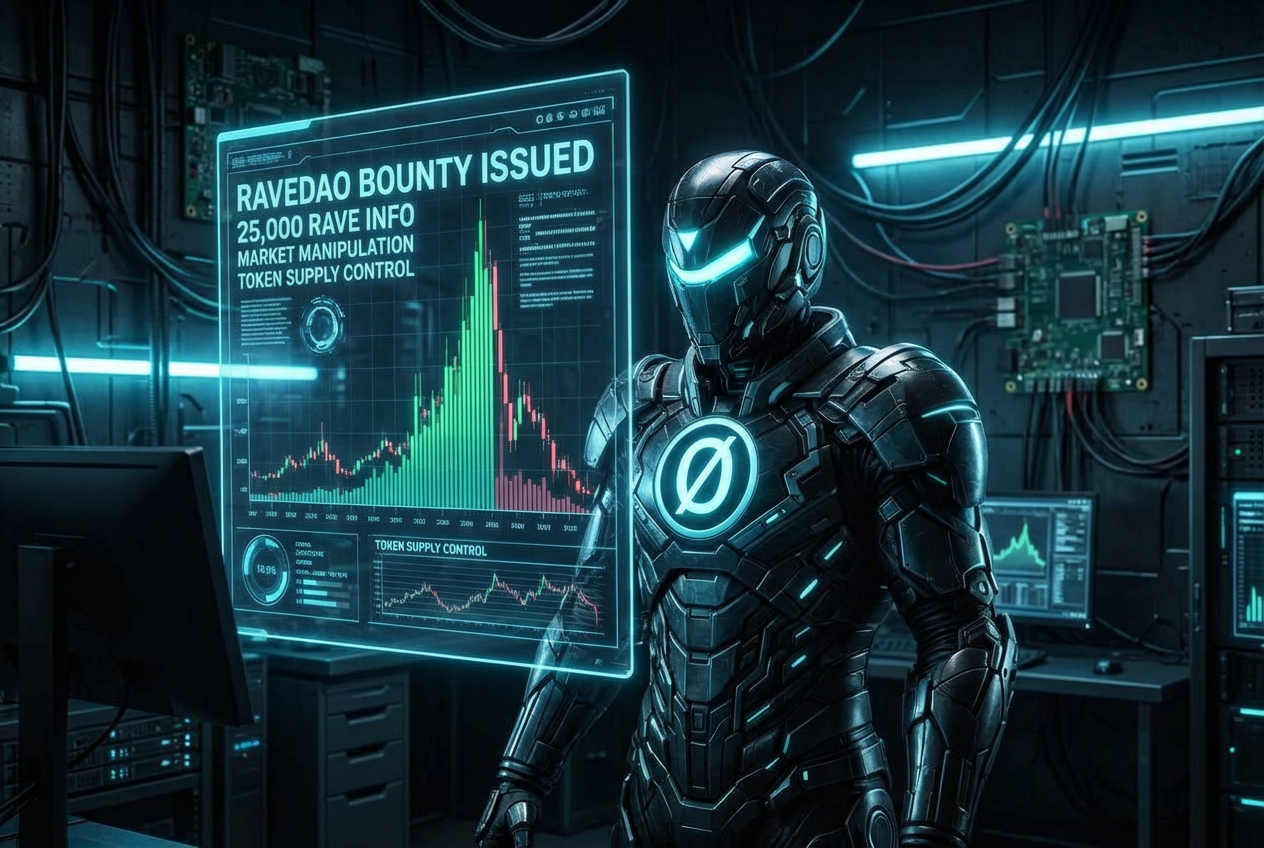
On-chain investigator ZachXBT has issued a twenty-five thousand dollar bounty for information regarding RaveDAO, following allegations of market manipulation and insider control of the RAVE token supply. The asset, which serves as the governance mechanism for a music festival project, experienced a twelve hundred percent price increase over a single week, reaching a market capitalisation of nearly seven billion dollars before a sharp correction. The investigator has called upon major centralised exchanges, including Binance and Bitget, to freeze accounts and conduct internal audits of the actors involved.
The incident highlights a recurring failure in the current digital asset landscape: the reliance on centralised intermediaries to police the integrity of the market. While RaveDAO markets itself as a decentralised entertainment initiative, the concentration of token supply suggests a high degree of centralisation in its economic structure. When a small group of insiders holds the keys to the majority of a circulating supply, the governance and utility of the protocol become secondary to the whims of those controllers. The subsequent request for exchanges to intervene further underscores the lack of sovereignty inherent in these systems. If a token's validity depends on the oversight of a third-party exchange, it is not a neutral protocol but a permissioned product.
The volatility observed in RAVE is a symptom of opaque distribution. In a truly transparent system, the flow of assets is verifiable on-chain, and the risk of insider dumping is mitigated by programmatic locks rather than the reactive investigations of exchange CEOs. By offloading the responsibility of trust to centralised platforms, users accept a model where their capital can be frozen or devalued based on the administrative decisions of a few entities. This reliance on human intervention to correct market irregularities is the antithesis of a trustless environment.
True sovereignty requires that the rules of the system are enforced by code, not by the shifting policies of exchanges or the social pressure of investigators. Until token distribution is provably decentralised and transparent from inception, participants remain at the mercy of those who hold the keys to the liquidity gates.


Discussion