The Hidden Hand: Orchestrating Global Power Through Crisis, Control, and Manipulation
The old world is being burned down again, not by fire this time, but through economic collapse, digital warfare, and engineered crises.

There is a pattern that does not break, no matter how far back you go or how modern the world becomes. It does not depend on technology, politics, or culture. It adapts to all of them. And once you see it clearly, it becomes very difficult to unsee, because it stops looking like history unfolding and starts looking like repetition.
A system rises. It reaches a point of control. Something disrupts it. Crisis spreads. And then, out of that crisis, a new structure emerges that does not restore what was lost, but replaces it with something more refined, more embedded, and more difficult to challenge. Each time, it is presented as necessary. Each time, it is accepted because the alternative feels worse. And each time, power does not disappear. It moves.
The Hidden Hand is not something you can point to directly. It does not need a name, a flag, or a single organisation. It is a continuity of influence that survives collapse by shifting form. It is what remains when empires fall, when systems reset, when the visible layer changes but the underlying control does not. It is not about who sits at the top at any given moment. It is about the structure that persists beneath them.
If you go back to the Khazar Empire, you begin to see the early shape of this shift. Unlike traditional empires built purely through conquest, this was a system that understood positioning, trade, and influence. Control was not just about land. It was about flow. And when that empire dissolved, it did not simply vanish into history. Power rarely does. It moved. It embedded itself into emerging financial centres, into systems that would outlast borders and armies.
That was the transition.
From visible empire to invisible influence.
From land to money.
From force to control through systems.
By the time Europe’s financial networks began to take shape, power had already evolved. It no longer needed to conquer openly. It could operate through structure. And once that structure was in place, it could expand without ever appearing to.
The Great Fire of London in 1666 becomes far more interesting when you look at it through that lens. A city is devastated. Infrastructure is wiped out. Trade collapses. What follows is not simply recovery, but restructuring. Within a generation, the Bank of England is established, introducing a model that fundamentally alters how nations operate. Money becomes tied to debt. Governments begin to rely on systems they do not fully control. Financial power separates from political appearance.
You can call that coincidence.
Or you can recognise the pattern.
Because it does not stop there.
Across the following centuries, major cities experience similar moments of destruction followed by transformation. Hamburg in 1842. Pittsburgh in 1845. Chicago in 1871. San Francisco in 1906. Each time, devastation clears the old. Each time, rebuilding introduces something new. Each time, control becomes more structured, more centralised, more embedded.
Destruction creates opportunity.
And opportunity is never distributed evenly.
This is where most people misunderstand power. They look for it in the visible layer. Governments, monarchies, public figures. But those are surfaces. The real movement happens underneath, in financial systems, in networks, in structures that operate regardless of who appears to be in charge.
The British monarchy, for example, still represents authority to many. But by the time it reached its modern form, the nature of power had already shifted. The City of London operates as a financial centre with its own autonomy. Banking networks extend globally. Influence no longer needs to sit in the throne room. It sits in the system.
And that system does not collapse.
It evolves.
Which brings you to the present.
Because the same pattern is playing out again, only now the medium has changed. The transition is no longer from land to finance. It is from finance to digital infrastructure. Money is being prepared for programmability. Identity is being tied into access. Communication is already filtered through systems that shape what people see and how they interact.
Individually, each piece looks like progress.
Together, they form a structure of control that is far more precise than anything that came before it.
But just like every transition before it, this does not arrive in a stable environment.
It arrives through pressure.
You do not move the world into programmable financial systems while people trust what they already have. You do it when confidence is low. When inflation has already eroded stability. When markets feel uncertain. When global tension is rising in exactly the places that affect energy, trade, and economic flow.
That is where we are.
And that is not accidental.
Because pressure is what makes people accept change.
This is where the saviour mechanism becomes critical.
Every time the system transitions, someone appears who speaks directly to the frustration people already feel. Someone who names the problem. Someone who sounds like they are outside of it. Someone who promises to break it.
And people believe them.
They always do.
Because belief fills the gap that uncertainty creates.
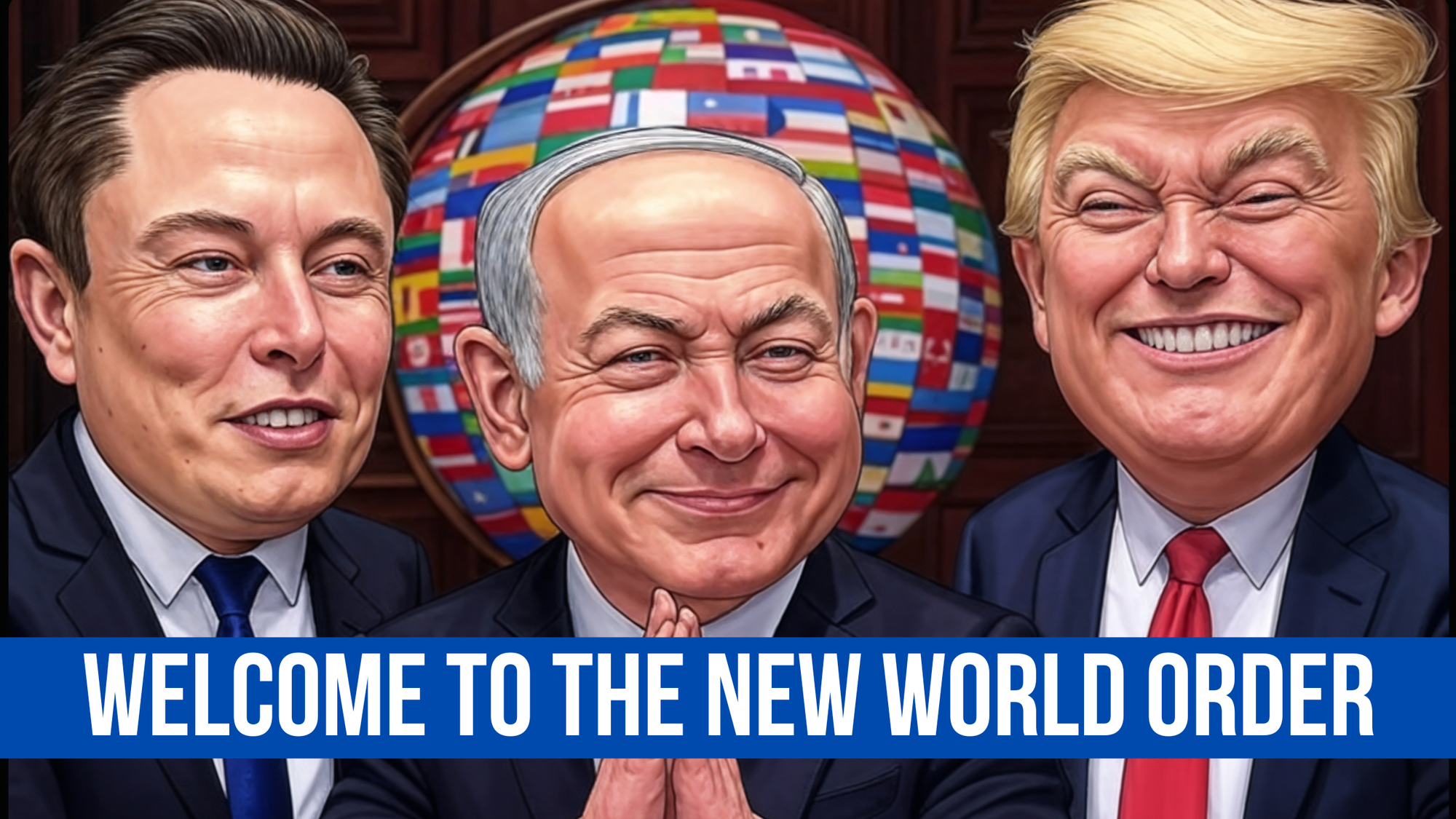
You see this clearly with Donald Trump. Before power was even in reach, the messaging was constant. “Deep state.” “Drain the swamp.” It was repeated enough times that it no longer needed to be proven. It just needed to resonate.
And it did.
But once belief is established, direction becomes secondary.
If he returns to power and the trajectory continues toward increased global tension, particularly in regions like Iran that directly affect energy flow and economic stability, most of those who believe in him will not question it. They will justify it. They will see it as necessary.
That is how the flip happens.
The saviour becomes the vehicle.
Not because people are forced to follow, but because they choose to.
The same applies in the technological space with Elon Musk. Presented as independent, as a defender of open communication, while building infrastructure that sits directly at the centre of future systems. AI, satellite networks, data environments. Again, the focus remains on the individual while the structure builds underneath.
Two different arenas.
Same function.
Hold attention at the surface.
Allow the system to evolve beneath it.
This is what the golden calf represents. Not a religious symbol, but a behavioural pattern. The moment people place belief in a figure to the point where they stop questioning direction, movement becomes easy. The path can go anywhere, and it will be followed, because those following are no longer observing outcomes. They are defending identity.
And while that happens, the transition completes.
War, or the credible threat of it, accelerates everything. It compresses time. It removes hesitation. It justifies rapid decisions and structural change. Financial controls tighten. New systems are introduced. Mechanisms that would have taken years to implement are accepted in months.
And once they are in place, they do not get removed.
They become permanent.
This is not collapse.
It is replacement.
The same pattern that has played out for centuries, now operating at a global, digital level. More integrated. More precise. More embedded than anything that came before it.
The only difference now is that the structure being built is not something you can step outside of easily once it is complete.
Which is why the only thing that matters is whether you can see it while it is still forming.
Because once it is in place, it will no longer need to hide.
Veritya


Discussion