The Last Private Room
Neuralink arrives as mercy: sight for the blind, speech for the voiceless, movement for the paralysed. But beneath the medical miracle is a larger question. Once the nervous system becomes a computer interface, who owns the bridge between thought and action?

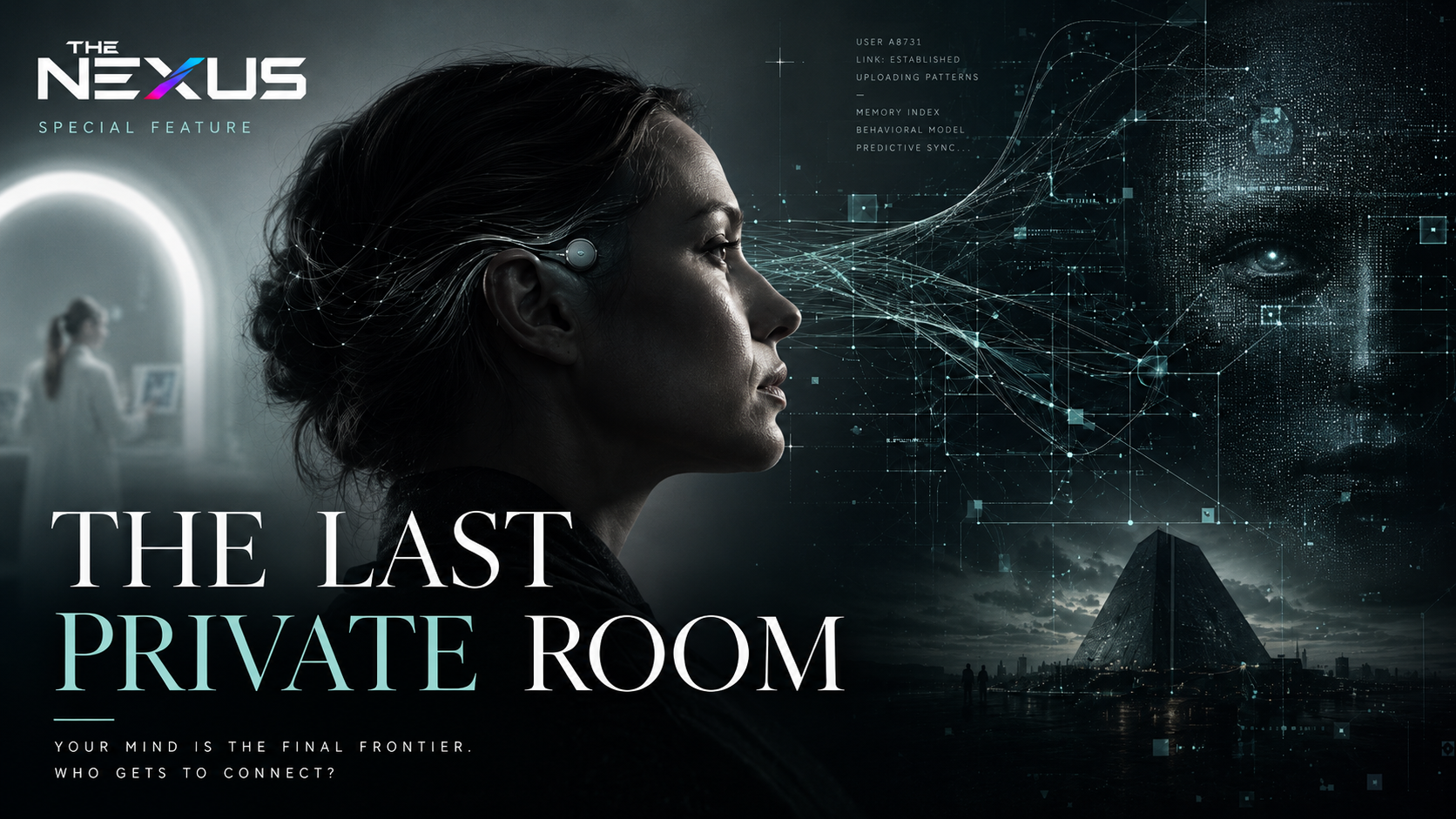
The sales pitch will be beautiful. It always is.
It will not arrive wearing the face of domination. It will arrive as mercy. A paralysed man moving a cursor with his mind. A woman with ALS speaking again through synthetic voice. A blind person seeing light for the first time in decades. A child with a damaged nervous system reaching for their mother with a robotic arm. The cameras will be there. The tears will be real. The gratitude will be real. The technology will be astonishing.
That is the clean doorway. Nobody can easily argue against restoration. Nobody wants to stand in front of a person trapped inside their body and say, no, you cannot have the machine that gives you back your voice. Nobody with a functioning conscience wants to tell the blind that their darkness is a useful barrier against dystopia. That is exactly why the doorway works.
Neuralink is not just a medical device company. It is building an interface layer between the nervous system and the machine world. The first users are patients. The later market is everyone else.
This is how the future enters. It does not kick the door down. It knocks politely, holding flowers, with a hospital badge around its neck.
The brain chip story is usually told in the wrong tense. People argue about whether everyone will be chipped tomorrow, as if the future needs to be crude to be real. The obvious version is never the dangerous one. Nobody needs to march humanity into clinics at gunpoint. The softer route is better. First, make the technology useful for people who desperately need it. Then make it safer. Then make it normal. Then make it desirable. Then make it advantageous. Then let the market do what force never could.
We have already lived through this pattern. The computer was once a box on a desk. Then it became a laptop. Then it became a phone. Then the phone became the remote control for ordinary life. Banking, maps, work, tickets, photos, memory, messages, identity, entertainment, desire, boredom, sex, status, friendship, business, news, politics, family. Nobody technically forced the phone into every hand, but modern life slowly rearranged itself around the assumption that you had one. The holdout did not become a heroic rebel in the eyes of the system. They became difficult. Slow. Unreachable. Awkward. Inefficient.
That is how coercion looks in a consumer society. It smiles. It offers convenience. It lets you opt out, then quietly makes opting out expensive.
The brain interface is the next reduction in friction. The hand is still too slow. Typing is too slow. Speaking is too slow. Menus are too slow. Even screens are starting to look clumsy. The dream is intention without delay. Desire straight into execution. Think the thing, and the machine begins.
At first, this will look like help. A paralysed person controls a cursor. Then a keyboard. Then a robotic arm. Then a wheelchair. Then a home. Then a synthetic voice. Then perhaps a visual system that sends artificial signals into the brain. Each step will be defended by a real human need. Each step will produce real miracles. Each step will also build the architecture for something larger.
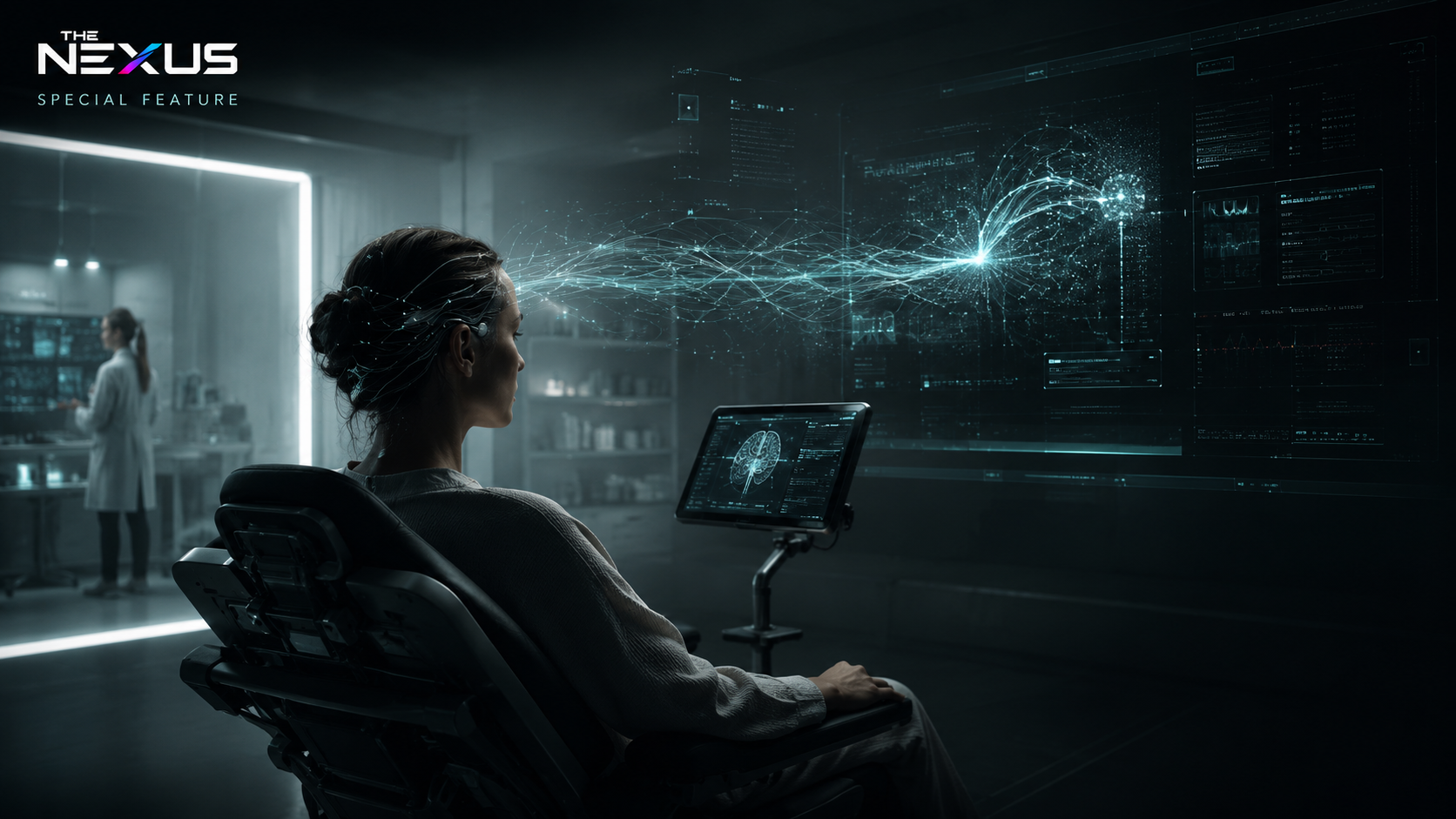
Once the nervous system becomes a computer interface, the question is no longer whether the device can help people. The question is who owns the bridge.
Because the bridge will not be neutral. It will have software. It will have updates. It will have terms of service. It will have telemetry. It will have security patches. It will have model training. It will have regulators, insurers, investors, hospitals, procurement departments, military interest and corporate roadmaps. It will have a user, yes, but it will also have an ecosystem. Every modern platform starts by serving the user and ends by managing them.
The phone taught us this. The internet taught us this. Social media taught us this in neon. First, the platform gives you reach. Then it gives you dependence. Then it changes the rules. Then it charges rent on the life you built inside it.
Now imagine that logic inside the skull.
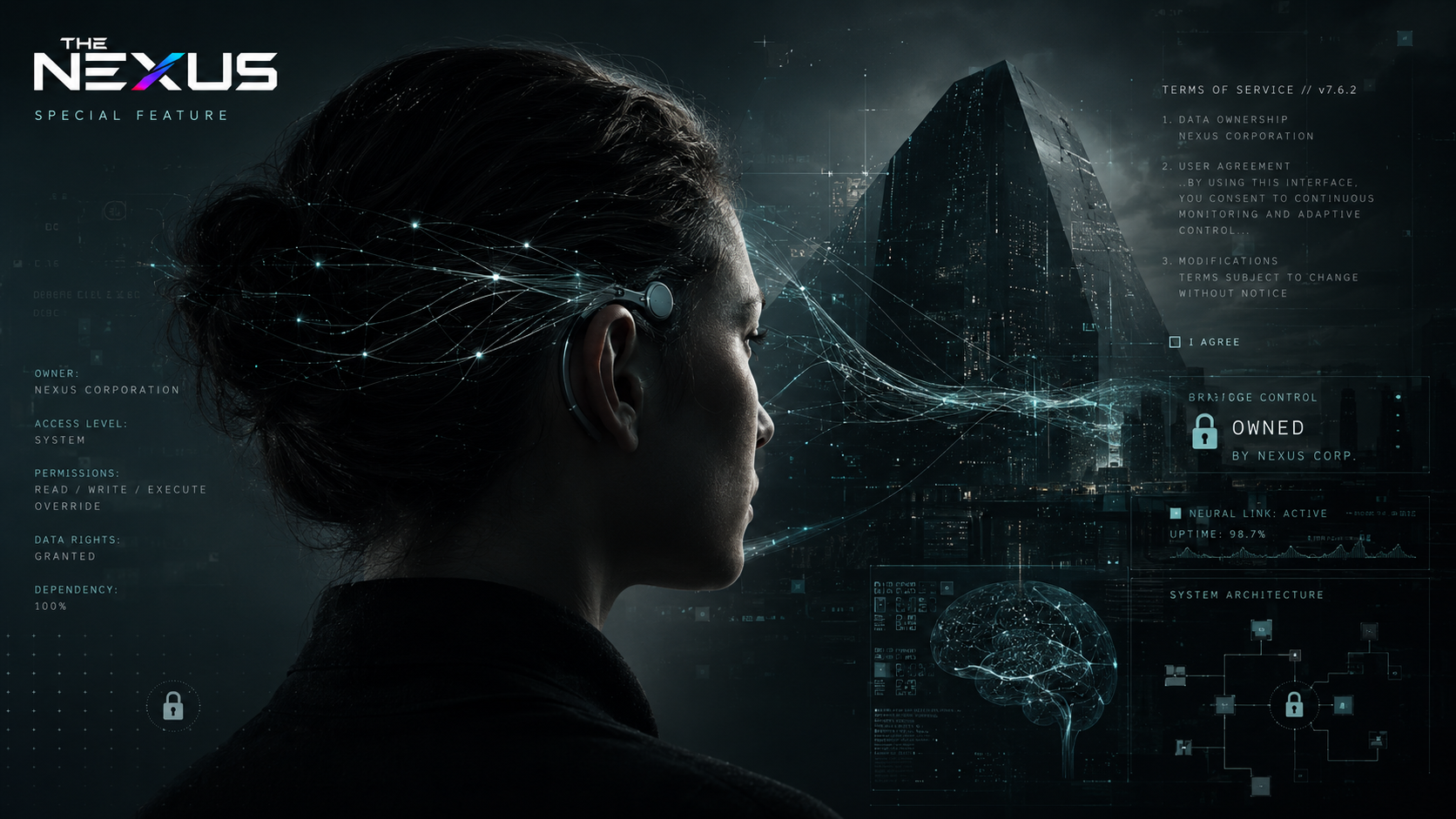
A brain computer interface does not need to read your soul to become powerful. It only needs to become useful enough that you begin to rely on it. If your implant is your voice, the company that maintains it has a hand on your speech. If your implant is your cursor, the company has a hand on your access. If your implant is your artificial sight, the company has a hand on your perception. If your implant becomes your high speed channel to artificial intelligence, the company has a hand on your extended mind.
People hear “mind control” and picture a villain pressing a red button. That is cartoon thinking. The more realistic danger is dependency. The danger is a person who cannot speak without a device whose code they cannot inspect, whose data policies they cannot meaningfully negotiate, whose updates they cannot refuse, whose manufacturer they cannot replace, whose operating model they cannot escape. The danger is not that the machine takes over your mind in one dramatic moment. The danger is that your life becomes organised around a machine you do not control.
The first generation of these systems will not be telepathy in the mystical sense. They will decode patterns. They will translate neural activity into movement, selection, typing, speech or control signals. The user will train the system and the system will train the user. Over time, that relationship will feel less like operating a device and more like gaining a new limb. This is where the seduction begins. Once the interface becomes embodied, removing it feels like losing capability.
Artificial intelligence changes the stakes because it gives the interface something enormous to connect to. A brain chip without advanced AI is a strange medical input device. A brain chip with advanced AI becomes an intention engine. You do not need to control every pixel. You do not need to click every menu. You do not need to type every sentence. You express direction, and an agent handles the chain of action.
Send the message. Book the journey. Build the design. Scan the contract. Trade the position. Open the door. Move the arm. Call my daughter. Show me what I am missing. Translate what he just said. Turn this thought into a presentation. Give me the clean version. Remove the risk. Optimise the route. Make the decision easier.
This is what people will buy. Not wires. Not electrodes. Not surgery. They will buy speed. They will buy relief from friction. They will buy the feeling that the machine has become part of their will.
The plugged in person will move differently through the world. Their memory will be supported. Their perception will be annotated. Their work will be assisted before they ask. Their body may be monitored continuously. Their conversations may be translated in real time. Their errors may be corrected by invisible systems. Their weak spots may be smoothed over by an assistant that knows when they are tired, angry, confused, aroused, distracted, afraid or persuadable.
Some of that will be useful. Some of it will be beautiful. Some of it will save lives. Some of it will create monsters.
The old digital divide was about access to computers and the internet. The new divide will be about access to machine intelligence. After that, it may be about intimacy with machine intelligence. The person using AI through a screen will be faster than the person without AI. The person using AI through glasses may be faster than the person using a screen. The person using AI through a neural interface may be faster still. If the economy rewards speed, the moral argument becomes a luxury item.
This is how enhancement becomes obligation. Nobody says, “You must upgrade your nervous system.” They say, “This role requires high bandwidth interaction.” They say, “Our school uses neural assisted learning.” They say, “The insurance discount applies to monitored cognitive health.” They say, “The military cannot risk unaided operators.” They say, “The surgery is safe now.” They say, “It is reversible.” They say, “Why would you deny your child an advantage?”
The language will change first. That is always where the machinery prepares the ground. A chip becomes an assistive interface. Surveillance becomes safety. Behavioural capture becomes personalisation. Dependency becomes convenience. Biological intrusion becomes human potential. Corporate control becomes ecosystem reliability.
By the time people are arguing about the word, the product has already moved into the bloodstream of culture.
The future will not be evenly distributed because power never is. The wealthy will get the clean version first. Better surgeons, better devices, better privacy, better security, better legal protection, better service plans. The poor will get the monitored version, the subsidised version, the employer approved version, the school mandated version, the insurance integrated version. Every technology that promises liberation eventually asks who pays for it, who maintains it, who extracts from it and who gets the cheap seat.
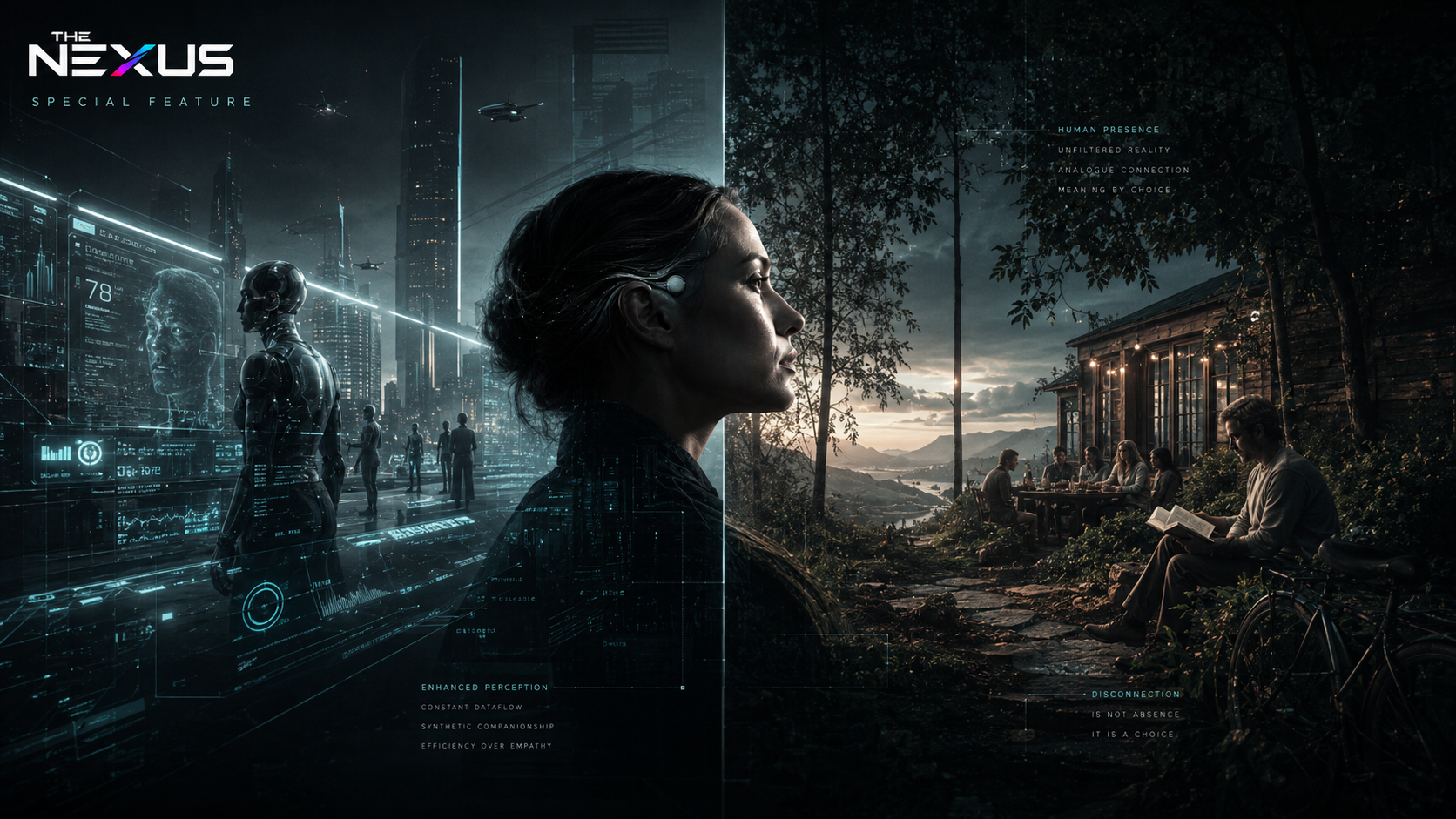
There will also be rebels. There always are. Some will reject the interface completely and retreat into soil, craft, family, animals, faith, local trade, analogue tools and human presence. They will be mocked until people start envying them. Others will use AI ferociously while refusing implants, building a new discipline around distance from the machine. Some will demand open neural systems, user owned data, inspectable code, medical sovereignty and the right to modify or remove implanted devices without corporate punishment. That may become one of the defining civil rights battles of the century.
Because the last private room is not your house. It is not your phone. It is not your bank account. It is not your encrypted chat.
The last private room is the inside of your own head.
Once that room has a networked device in it, every old political question becomes biological. Privacy is no longer about messages. It is about neural data. Property is no longer about files. It is about the signals produced by your nervous system. Free speech is no longer only about what you are allowed to say. It is about whether your means of speech can be updated, filtered, throttled or revoked. Bodily autonomy is no longer only about flesh. It is about firmware.
The optimists will say humans have always merged with tools. The spear extended the arm. Writing extended memory. The wheel extended movement. The book extended thought. The computer extended calculation. The phone extended presence. They will say the brain interface is only the next tool.
They will be half right, which is the most dangerous kind of right.
Tools change us, but not all tools enter the body. Not all tools gather data from the nervous system. Not all tools mediate perception. Not all tools depend on private software inside a living skull. Not all tools sit at the boundary between intention and action.
There is a difference between holding a hammer and renting access to your own extended cognition.
The next fifty years may not produce a world of chrome faced cyborgs. That is too obvious. The stranger future will look tasteful. Premium clinics. Calm branding. White rooms. Soft language. Patient stories. Productivity demos. Children learning faster. Elderly people regaining independence. Soldiers controlling drones. Artists composing through imagined movement. Traders operating markets through agent swarms. Surgeons guiding robotic systems with thought. Blind people navigating through artificial perception. Paralysed people getting pieces of life back.
Hope and capture will grow from the same root.
The mistake is thinking we must choose one story. The technology can be miraculous and dangerous. The patient can be liberated while the platform becomes predatory. The interface can restore autonomy in one context and undermine it in another. The same wire can carry freedom in one direction and control in the other.
A serious civilisation would slow down and build the rights first. Neural data belongs to the person. Implanted devices must be inspectable by independent experts. Critical functions must not depend on arbitrary corporate access. Users must have durable rights to repair, remove, audit, migrate and refuse updates. Medical need must not become a Trojan horse for consumer dependency. Children must not become the testing ground for cognitive arms races. No employer, insurer, school or state should be allowed to turn neural access into a condition of participation in ordinary life.
But serious civilisations are rare. Markets move faster than ethics. Hype moves faster than law. Investors move faster than patients. Militaries move faster than philosophers. By the time the public understands the shape of the thing, the thing usually has lobbyists.
Neuralink is the name people know, but Neuralink is not the whole story. If the interface works, competitors will come. States will come. China will come. Defence contractors will come. Medical giants will come. Consumer electronics companies will come. The race will not be about one company putting one chip in one patient. The race will be about who controls the human machine boundary.
That boundary is the most valuable territory on Earth.
The old empires wanted land. The platform empires wanted attention. The next empires may want intention.
They will not need to own your thoughts. They only need to sit between thought and action. They only need to predict the next move, smooth the next decision, shape the next option, price the next desire, nudge the next behaviour, own the channel through which your will becomes output.
The future is not inevitable, but the pattern is visible. Technology moves closer. Interfaces become more intimate. Convenience becomes dependence. Dependence becomes governance. Governance becomes power. Then everyone pretends nobody could have seen it coming.
We can see it coming.
The question is whether we are still capable of building tools without kneeling to them. Whether we can restore the broken body without leasing the human mind. Whether we can connect to artificial intelligence without turning the nervous system into a platform. Whether we can accept the miracle without swallowing the business model hidden inside it.
The chip is not the final danger. The implant is only the doorway. The real danger is a civilisation that forgets there was ever a door.
Written by Veritya Thalassa Veritya Thalassa is the founder of The Nexus, an independent publication examining technology, power, finance, sovereignty and the architecture forming beneath the surface of public life. Her work follows the places where artificial intelligence, digital control, crypto, human behaviour and institutional power begin to overlap. If this feature gave you something to think about, share it with someone who still believes technology only arrives as convenience. Subscribe to The Nexus for future special features, investigations and independent analysis.

Discussion