Grinex collapse exposes the fragility of sanctioned shadow liquidity
The Russian crypto exchange Grinex, a primary conduit for the sanctioned A7A5 stablecoin, has ceased operations following an alleged cyberattack. The platform claims to have lost over 1 billion rubles, roughly 13 million dollars, in an operation they attribute to foreign intelligence services. This

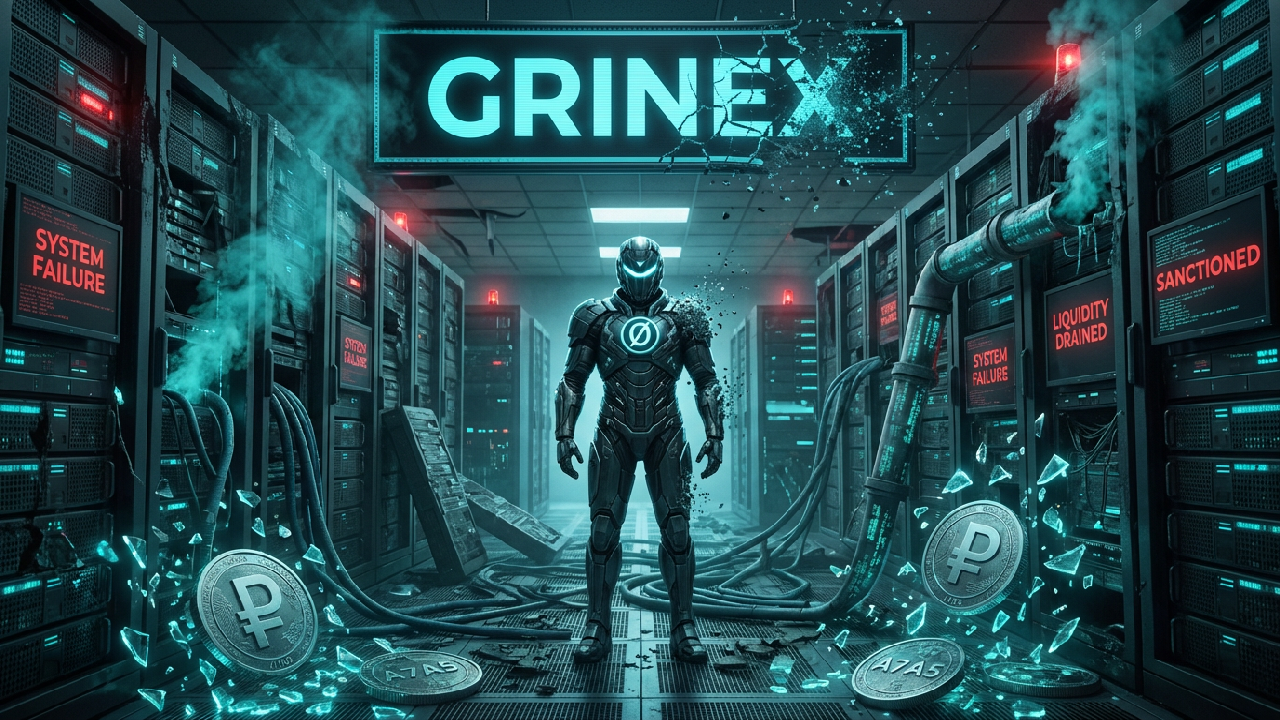
The Russian crypto exchange Grinex, a primary conduit for the sanctioned A7A5 stablecoin, has ceased operations following an alleged cyberattack. The platform claims to have lost over 1 billion rubles, roughly 13 million dollars, in an operation they attribute to foreign intelligence services. This shutdown effectively severs a critical link for Russian commercial entities attempting to convert local currency into international liquidity, further isolating an economy already under significant pressure from global sanctions.
Grinex functioned as the successor to Garantex, another sanctioned entity designed to provide a financial escape valve for the Russian state. By facilitating nearly 100 billion dollars in volume for the A7A5 stablecoin, the exchange acted as a centralised hub for a shadow financial system. The reliance on a single, opaque entity to manage these flows created a massive point of failure. Whether the disruption was caused by a sophisticated state-level exploit or internal mismanagement, the result remains the same, the users of the system have lost access to their capital because they trusted a centralised intermediary to hold the keys.
The failure of Grinex is a failure of trust assumptions. The exchange was built to bypass the traditional banking network, yet it replicated the same structural vulnerabilities by requiring users to rely on a single point of control. In this model, the security of the entire network is only as strong as the exchange's internal defences. When those defences are breached, or when the state-aligned operators decide to close the gates, the sovereignty of the individual participant is extinguished. The use of a stablecoin like A7A5, which is itself subject to issuer-level freezes and sanctions, adds another layer of fragility to this infrastructure.
This event demonstrates that moving away from the global banking system is not the same as achieving financial sovereignty. If the alternative requires trusting a centralised exchange that can be shuttered by a hack or a decree, the user has merely traded one master for another. True resilience requires the removal of the intermediary entirely.
Zero Trust dictates that any system requiring a central authority to manage liquidity is inherently compromised. Until transactions are settled on-chain without the need for sanctioned gateways, participants remain vulnerable to the total loss of access and value.
---
Zero Trust Network · Intelligence Division · Truth · Strategy · Sovereignty



Discussion