THORchain Paused After $10.8M Cross-Chain Exploit
THORchain is offline. The entire network was halted by its operators after an attacker drained roughly $10.8 million from its liquidity pools on May 15th. All swaps, deposits, and withdrawals are frozen. The theft hit native assets from Bitcoin, Ethereum, BNB Chain, and Base, and the protocol's RUNE

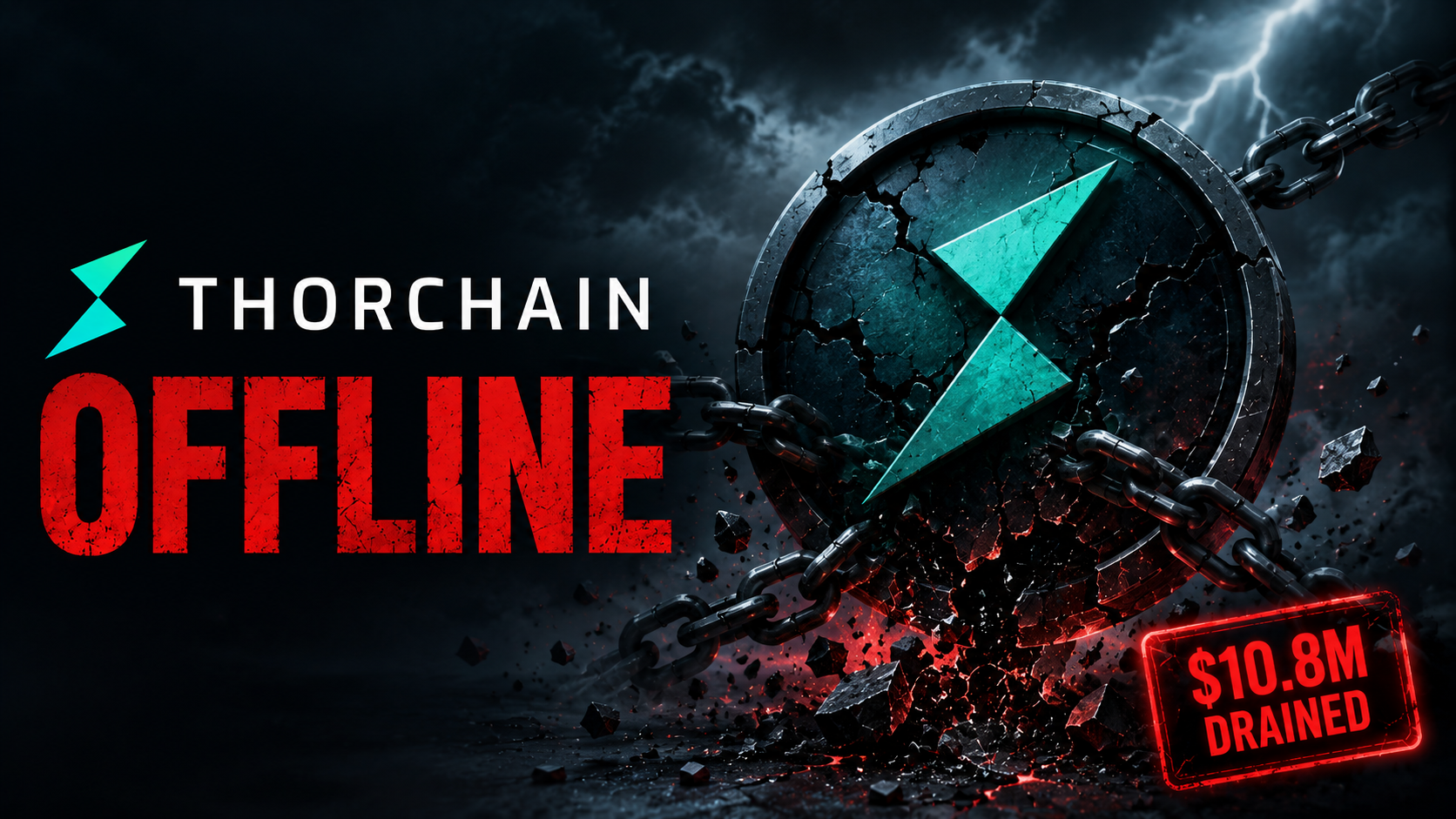
THORchain is offline. The entire network was halted by its operators after an attacker drained roughly $10.8 million from its liquidity pools on May 15th. All swaps, deposits, and withdrawals are frozen. The theft hit native assets from Bitcoin, Ethereum, BNB Chain, and Base, and the protocol's RUNE token dropped over ten percent on the news.
The network's premise is swapping real assets between blockchains without a central custodian or wrapped tokens. Security rests on a promise, enforced by a network of anonymous node operators who must bond more of the protocol's own RUNE token than the value of the assets they guard. These pooled assets live in shared vaults controlled by a threshold signature scheme. To move any funds, a supermajority of these anonymous operators must sign off. In theory, this prevents theft.
The theory just failed. The attacker didn't brute force the vaults; they tricked the guards into opening the door. Unauthorized transactions were generated, validated, and signed by the required two-thirds majority of node operators. This points not to a compromised key or a weak password, but a fundamental flaw in the protocol's state machine. The system was convinced to authorize a theft against itself. The attacker didn't pick the lock, they were handed the key by the protocol's own logic.
The decision to halt the network came from Mimir, the protocol's administrative override system. This is the kill switch. While framed as a safety feature, its use confirms that a small group of keyholders retains ultimate power to freeze the entire system and all user funds inside it. A protocol one team can pause is a custodian with extra steps.
THORchain has been here before. A string of attacks in July 2021 drained over $15 million by targeting similar complexities in its cross-chain logic. The protocol was rebuilt, audited, and given an insurance fund. The core risk, however, remained.
This is the signature failure mode of the entire cross-chain sector. The massive exploits at Wormhole, Ronin, and Multichain all hit the same weak point: the complex, central logic that tries to stitch together siloed blockchains. These bridges are architectural honeypots. They concentrate hundreds of millions in capital while creating an attack surface so novel and convoluted that securing it has proven nearly impossible. The response is also a pattern. A project sold on the promise of decentralization is saved by a centralized panic button, revealing the delegated trust that was always there.
For now, every dollar provided as liquidity to THORchain is trapped. The timeline to patch the bug, audit the fix, and restart the network is anyone's guess. LPs are exposed to market risk on assets they cannot move.
The protocol's economic model now faces its real test. The theft leaves a hole in the vaults. The design says the node operators who mistakenly signed the fraudulent transactions should have their bonded collateral slashed to make users whole. Actually doing so would be a brutal, perhaps fatal, test of the network's incentives. The alternative is to cover the loss from the main treasury, draining funds meant for development and admitting the security model failed. The question is no longer just about the code. It is about who will be forced to pay for the error.
---
Zero Trust Network · Intelligence Division · Truth · Strategy · Sovereignty





Discussion