US Indictment Details Physical Coercion as Vector for Crypto Theft
The wrench attack has a name for a reason. For one victim, it meant being forced to transfer $6.5 million in crypto to an attacker's wallet. A federal grand jury has now unsealed an indictment against three men, Elijah Armstrong, Nino Chindavanh, and Jayden Rucker, for this and other planned home in

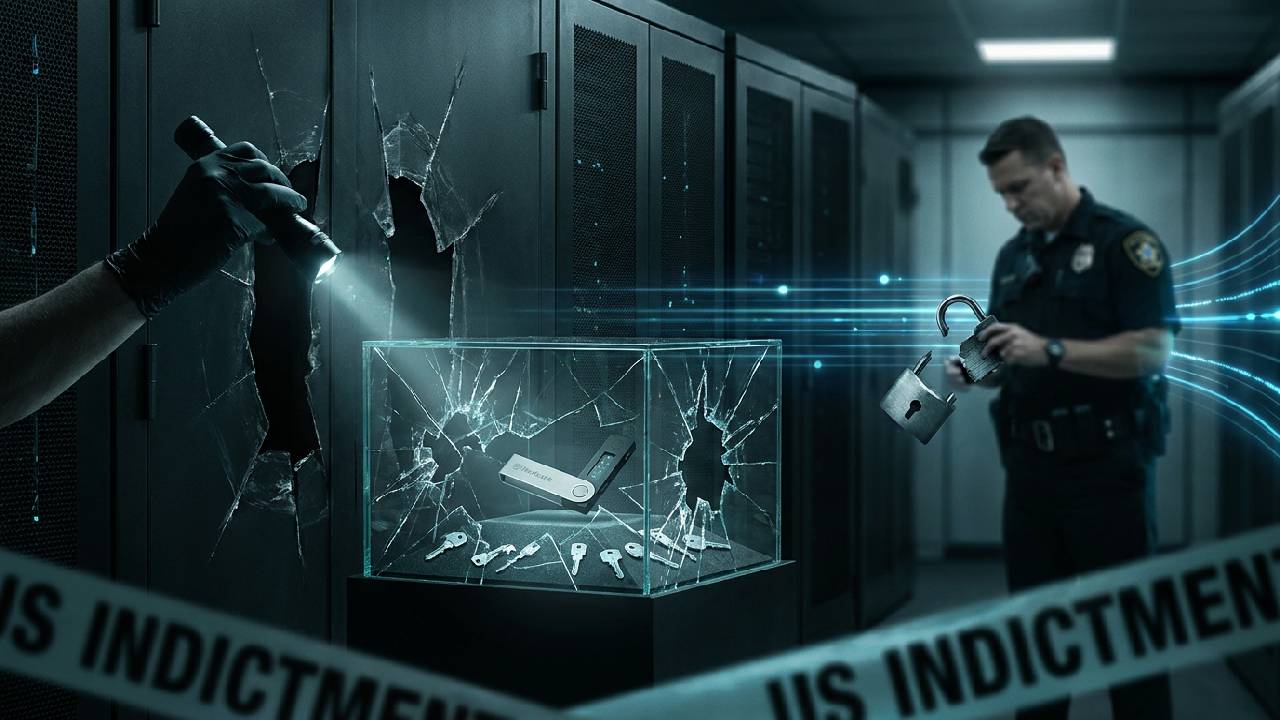
The wrench attack has a name for a reason. For one victim, it meant being forced to transfer $6.5 million in crypto to an attacker's wallet. A federal grand jury has now unsealed an indictment against three men, Elijah Armstrong, Nino Chindavanh, and Jayden Rucker, for this and other planned home invasions. The Justice Department alleges they targeted at least four people in California, bypassing digital security by applying physical force directly to the asset holder.
Your hardware wallet cannot help you when the threat is holding a hammer. The cryptography held. The software was fine. The failure was human operational security, which is a polite way of saying someone found the person holding the keys and threatened them until they complied. Self-custody collapses all security down to a single point of failure. You.
The attackers did their homework. They built dossiers on their targets using the breadcrumbs people leave online, from social media flexing to conference attendance lists. The real prize, however, comes from data breaches. The Know Your Customer information you provide to an exchange for compliance becomes a targeting list for criminals after the inevitable data leak. Your wallet address gets a name, and that name gets a physical address. The indictment says the men posed as delivery drivers. Once inside, a stolen seed phrase is a total compromise, granting the thief permanent control of the wallet. A coerced transaction is bad. A stolen seed phrase is ruin.
This is simply the next step in the evolution of crypto theft. The game started with phishing and malware, then escalated to SIM swaps that exploited weaknesses in telecommunications. Now that on-chain assets are worth kidnapping someone for, the attacks have moved from the digital world into the physical one. This is not just a California problem. French police recently arrested nearly ninety people for the same style of crime. The pattern is classic home invasion, updated for a new asset class. Cryptocurrency is a thief's dream: weightless, instantly transferable across any border, and irreversible.
The pseudonymity of the chain is a dangerous fiction. On-chain analytics can trace and cluster activity with remarkable precision. Off-chain data breaches provide the link to the real world. The attackers are not guessing. They are executing on intelligence.
This forces a hard look at the security model for any significant holding. A single-signature wallet, controlled by one person in one location, is a honey pot with a home address. Its security is entirely dependent on the personal, physical security of the holder, a job most people are not trained for. The logical response is to distribute trust. Multi-signature wallets and other complex custody arrangements are designed to eliminate the single human point of failure. The question is whether users will adopt them, or if the wrench will drive them back to custodians.
---
Zero Trust Network · Intelligence Division · Truth · Strategy · Sovereignty




Discussion