Binance Denies Allegations of Sanctioned Iranian Fund Flows Post-Settlement
Binance is publicly denying a media report alleging the exchange processed approximately $850 million in transactions for a network connected to sanctioned Iranian financier Babak Zanjani. The funds were reportedly channeled, in part, to Iran’s Islamic Revolutionary Guard Corps (IRGC).

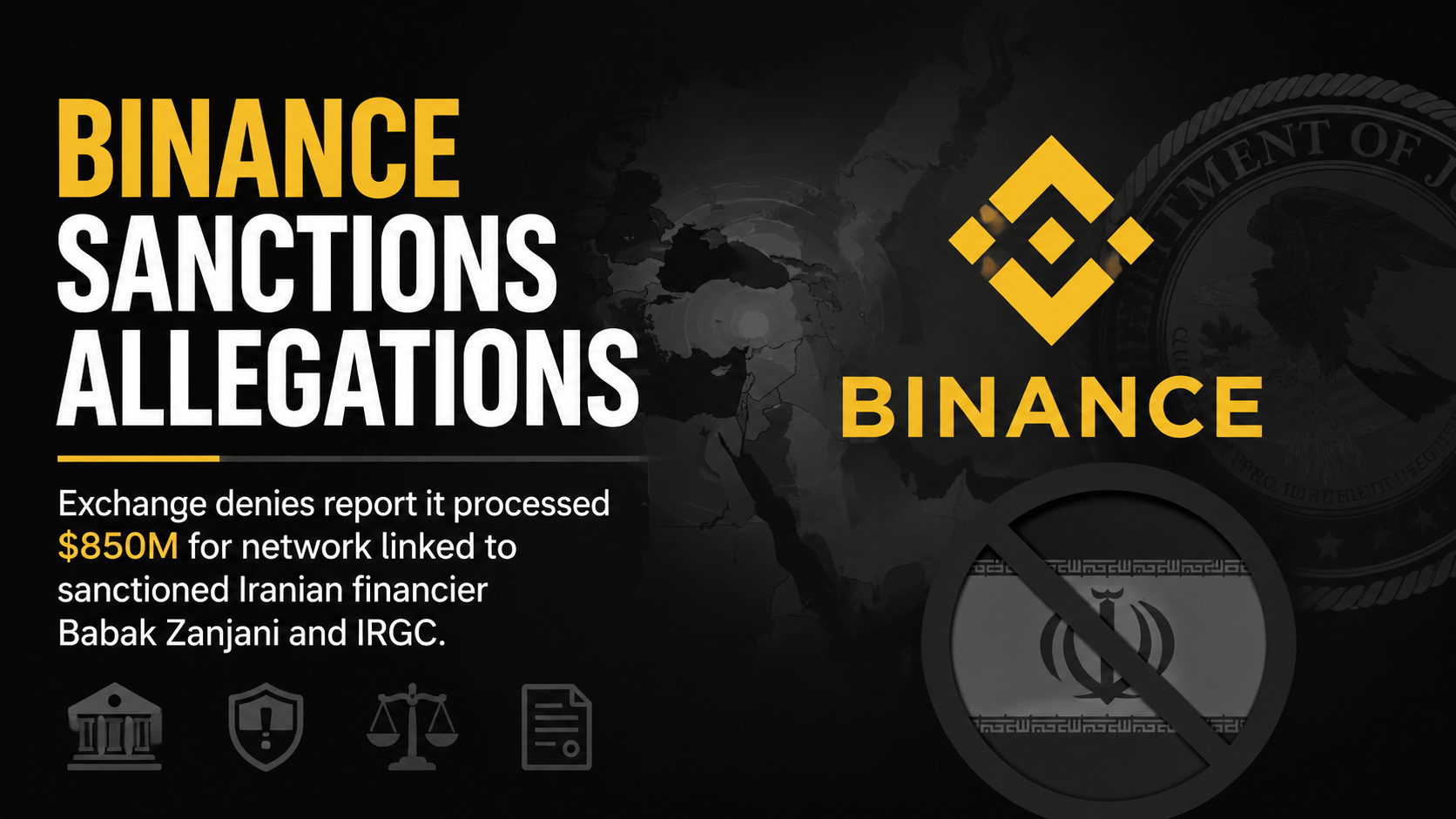
Binance is publicly denying a media report alleging the exchange processed approximately $850 million in transactions for a network connected to sanctioned Iranian financier Babak Zanjani. The funds were reportedly channeled, in part, to Iran’s Islamic Revolutionary Guard Corps (IRGC).
The allegations are significant because the activity is said to have occurred after Binance’s November 2023 settlement with the United States Department of Justice. That settlement included a $4.3 billion fine for systemic anti-money laundering (AML) and sanctions violations. Binance CEO Richard Teng stated the reporting is “fundamentally inaccurate,” asserting that any relevant transactions predated the US sanctions placed on the individuals involved.
Anatomy
The alleged compliance failure centers on a network of accounts controlled by Babak Zanjani, who was re-sanctioned by the US in January. According to the report, the network included an account for Zanjani’s firm, Zedcex, alongside accounts belonging to his sister, a romantic partner, and a company director. A critical operational security lapse was noted: all associated accounts were reportedly operated from the same devices, a clear indicator of a coordinated entity.
The core of the failure lies not in detection, but in enforcement. Binance’s internal compliance systems reportedly flagged the Zedcex account in late 2024 after detecting access from an IP address in Tehran. Over the following year, the account triggered more than a dozen additional internal alerts. The report alleges that Binance’s own investigators recommended the accounts be closed and reported to authorities. Despite these internal recommendations, the accounts remained active.
This sequence suggests a structural weakness in Binance's control framework. The breakdown appears to be a disconnect between the compliance function's findings and the executive authority to act on them. The persistence of high-risk accounts, despite repeated internal flags, suggests compliance recommendations were overridden or ignored. This points to a failure of centralized control, where the exchange operator retains ultimate discretion to keep accounts active against the advice of its own risk-management personnel. The activity allegedly continued well after the 2023 settlement, an agreement intended to remedy these exact deficiencies.
Pattern
The allegations fit a recurring pattern of reports, denials, and legal maneuvers involving Binance and sanctioned entities. In February, a separate report alleged that Binance had dismantled an internal investigation into approximately $1 billion in funds flowing to networks linked with Iranian proxy groups. Binance denied shutting down the probe.
In March, another report claimed the US Department of Justice had opened a new investigation into Iran’s use of Binance to evade sanctions, specifically examining activity that occurred after the November 2023 guilty plea. In response, Binance filed a defamation lawsuit against the publication, a tactic that escalates the conflict but also opens the company to the legal discovery process, which could compel the release of the internal documents in question.
The current situation mirrors the conditions that led to the 2023 settlement. The DOJ’s case against Binance detailed a corporate culture that prioritized growth over compliance, resulting in a failure to register as a money services business and the wilful neglect of an effective AML program. This allowed actors from sanctioned jurisdictions, including Iran, to transact significant volumes. The new allegations suggest that, despite the record fine and the agreement to overhaul its systems, the fundamental tension between commercial incentives and regulatory compliance may not have been resolved.
Forward Implication
The primary entity to watch is the independent compliance monitor appointed as part of the 2023 plea agreement. This monitor, granted extensive access to Binance’s internal records and systems for a multi-year term, is tasked with evaluating and overseeing the remediation of the exchange’s compliance program. The monitor’s findings, reported directly to the DOJ, will be the definitive assessment of whether Binance is adhering to the terms of its settlement. If the current allegations are substantiated by the monitor, it would constitute a material breach of the agreement, exposing Binance to severe follow-on penalties, including actions that could threaten its operational licenses.
Binance’s strategy of aggressive public denial coupled with litigation creates a high-stakes confrontation. The defamation suit against the media outlet risks backfiring if discovery validates the reporting. For financial institutions and other regulated partners that have cautiously re-engaged with Binance following the settlement, these reports renew concerns about counterparty and secondary sanctions risk.
The central question is whether the compliance overhaul at Binance was merely procedural or truly structural. An effective control regime requires a compliance department that can unilaterally enforce its findings, without the possibility of a commercial or executive override. The continued presence of high-value accounts linked to sanctioned jurisdictions, years after these issues were first identified, suggests this authority may still be lacking at Binance.
---
Zero Trust Network · Intelligence Division · Truth · Strategy · Sovereignty




Discussion