Bitcoin Depot Collapses Under Regulatory, Financial Pressure
Bitcoin Depot, the largest operator of Bitcoin ATMs in North America, has filed for Chapter 11 bankruptcy protection. The company announced the voluntary filing to facilitate an orderly wind-down and asset sale. All 9,700 of its kiosks, located in retail locations like petrol stations and convenienc

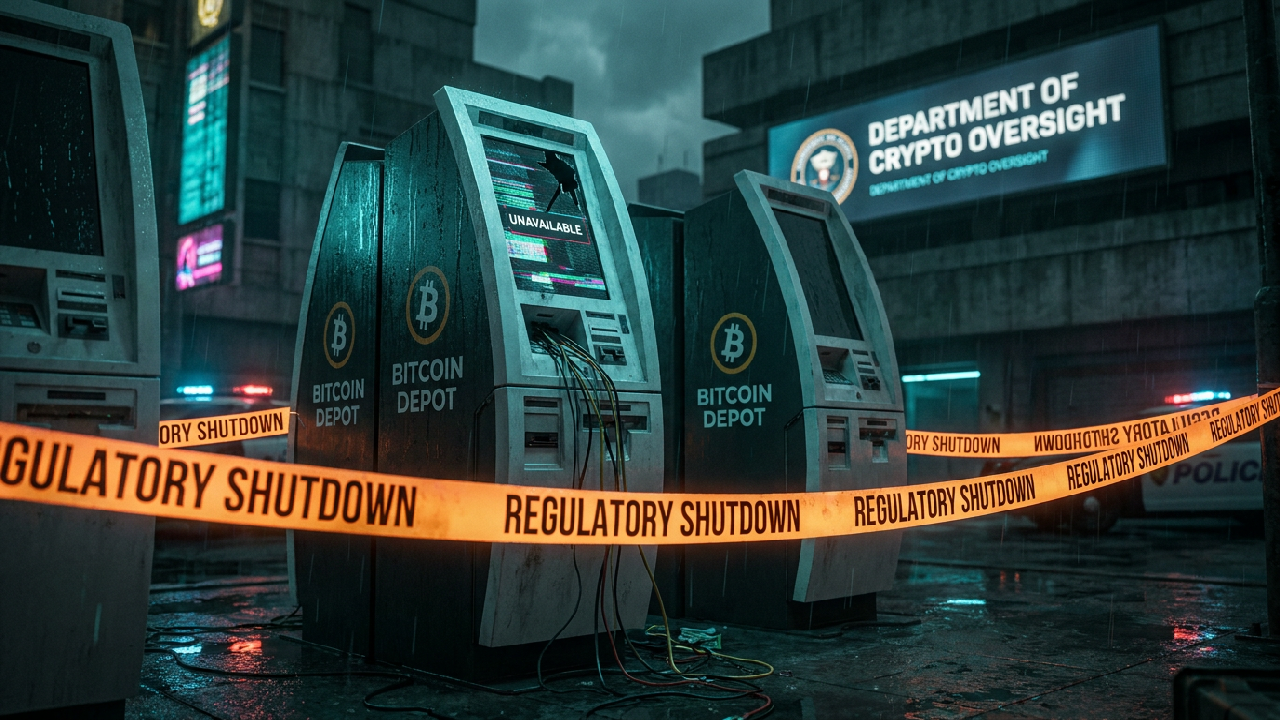
Bitcoin Depot, the largest operator of Bitcoin ATMs in North America, has filed for Chapter 11 bankruptcy protection. The company announced the voluntary filing to facilitate an orderly wind-down and asset sale. All 9,700 of its kiosks, located in retail locations like petrol stations and convenience stores, have been taken offline. The bankruptcy filing reports between $10 million and $50 million in both assets and liabilities. The collapse follows severe financial distress, including a 49% year-over-year reduction in revenue, a net loss of $9.5 million for the last reported year, and a recent hack resulting in a $3.67 million loss. The company explicitly cited an increasingly hostile state-level regulatory environment as a primary cause for its failure.
Bitcoin Depot operated as a centralized, physically distributed brokerage. The firm was not a bank providing access to a user's own funds; its kiosks were terminals for brokered, cash-for-crypto transactions. A user would insert cash into the machine and provide a destination Bitcoin wallet address. Bitcoin Depot, acting as the counterparty, would then source bitcoin from its own reserves or from a partner exchange and transmit it to the user's address. The company's profitability was derived from the spread and fees charged on these transactions.
This model had several structural flaws. First, the company was a centralized custodian of both fiat currency, collected from machines, and cryptocurrency, held in its own hot wallets and exchange accounts. This made it a single point of failure and a prime target for theft, demonstrated by the $3.67 million hack in April. The keys to the company's reserves were held by the company, not the user, until the transaction was settled on-chain.
Second, the physical infrastructure created significant overhead. The business required contracts with thousands of retail locations, physical maintenance of the kiosks, and secure logistics for collecting and processing large amounts of cash. This high-cost, low-margin model was fragile, evidenced by the sharp revenue decline that pushed the company into insolvency.
Third, and most critically, the business model proved to be a magnet for regulatory action. Because the kiosks accepted untraceable cash and interacted directly with the blockchain, they became a preferred tool in social engineering scams. An FBI report noted a 99% year-over-year increase in fraud incidents involving crypto ATMs, with losses nearing $250 million. This provided state regulators with the political mandate to act. The response was twofold: direct prohibition, seen in total bans in Indiana and Tennessee, and indirect strangulation through litigation and compliance burdens. Lawsuits from Massachusetts and Iowa allege misleading pricing structures and predatory policies, attacking the core profitability of the transaction model.
The failure of Bitcoin Depot is not an isolated incident but the culmination of a wider pattern targeting fiat-to-crypto on-ramps. It mirrors the pressure previously applied to the banking sector under initiatives
---
Zero Trust Network · Intelligence Division · Truth · Strategy · Sovereignty





Discussion