Iran’s “Hormuz Safe” Bitcoin Insurance Platform Signals a New Phase in State-Level Crypto Adoption
Iran has launched a maritime insurance platform called Hormuz Safe, designed to provide shipping coverage for vessels transiting the Strait of Hormuz using Bitcoin for settlement. The initiative marks one of the clearest examples yet of a nation state integrating public blockchain infrastructure int

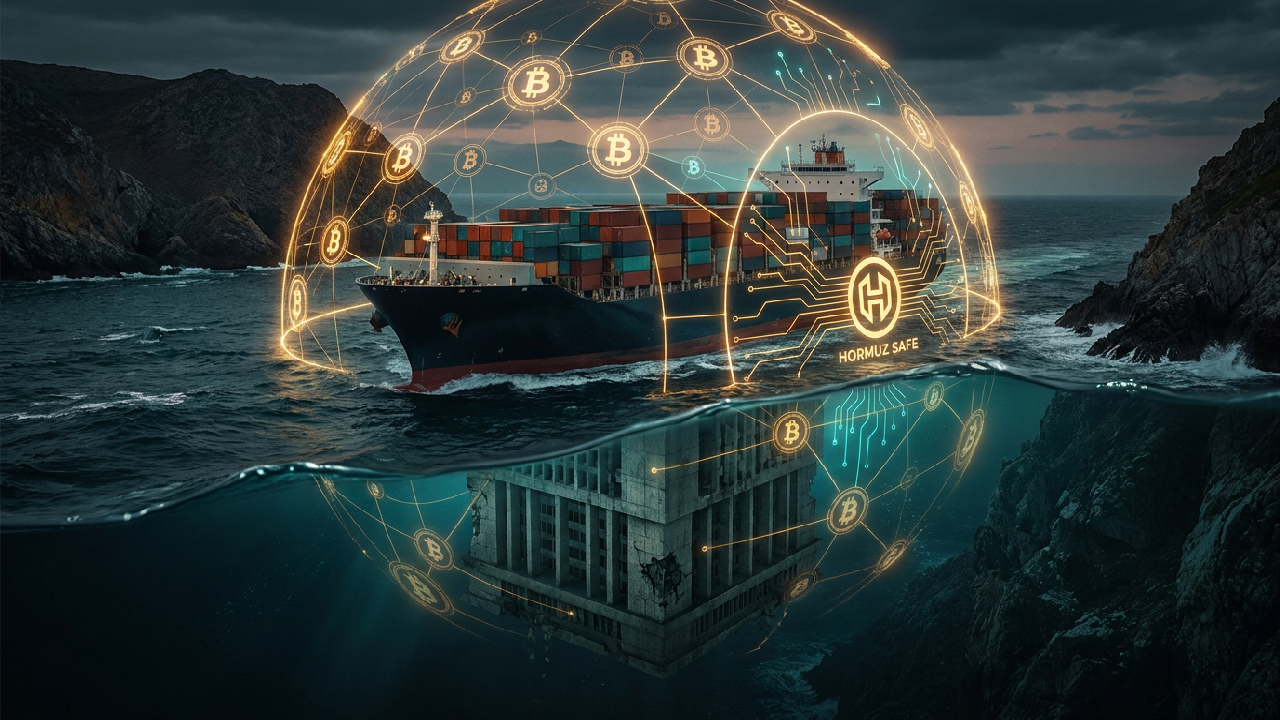
Iran has launched a maritime insurance platform called Hormuz Safe, designed to provide shipping coverage for vessels transiting the Strait of Hormuz using Bitcoin for settlement. The initiative marks one of the clearest examples yet of a nation state integrating public blockchain infrastructure into a strategically important economic system, not as speculation, but as functional financial rail.
The Strait of Hormuz remains one of the most geopolitically sensitive waterways in the world. Roughly one fifth of the global oil supply passes through the narrow corridor connecting the Persian Gulf to international shipping lanes. Any disruption to traffic through the region has historically impacted global energy markets almost immediately. Insurance for vessels operating in these waters is therefore not optional. It is a foundational layer of global trade.
Hormuz Safe appears designed to solve a very specific problem. International sanctions have increasingly restricted Iran’s access to the dollar based financial system, including shipping finance, trade settlement, and insurance underwriting. Traditional maritime insurance markets rely heavily on Western banking infrastructure, SWIFT messaging systems, and international insurers operating within the reach of US and allied sanctions enforcement. By introducing Bitcoin as the settlement rail, Iran is attempting to construct an alternative channel capable of functioning outside those restrictions.
The structure of the platform is important to understand. Hormuz Safe is not a decentralised insurance protocol operating autonomously on smart contracts. It does not resemble DeFi insurance experiments built around algorithmic pools or on chain governance. The platform instead uses Bitcoin as a payment and settlement asset within an otherwise centralised operational framework.
Shipping operators seeking insurance coverage apply through the Hormuz Safe platform. Policies are priced against conventional fiat benchmarks but settled in Bitcoin. Premiums are transferred to Bitcoin wallets controlled either by the insurer itself or by custodial entities associated with the platform. Claims processing remains entirely off chain, with human arbitration, documentation review, and underwriting decisions handled through traditional administrative structures.
In practical terms, Bitcoin functions here as politically neutral settlement infrastructure rather than as a decentralised governance mechanism. The blockchain removes reliance on correspondent banks, dollar clearing networks, and payment processors vulnerable to sanctions enforcement. It allows value transfer between parties without requiring permission from the international financial system that Iran has increasingly been excluded from.
This distinction matters because it reflects a broader evolution in how states may begin utilising public blockchains. For years, much of the crypto industry focused heavily on speculative assets, decentralised applications, and retail trading ecosystems. Hormuz Safe demonstrates a different trajectory entirely. A sovereign state is using a public blockchain as infrastructure for strategic trade resilience.
The implications extend beyond Iran itself.
Global shipping insurance is traditionally concentrated among a relatively small group of institutions, many operating within London based insurance markets and Western aligned financial systems. If sanctioned or politically isolated states begin settling critical trade services through censorship resistant digital assets, the geopolitical role of public blockchains changes substantially. Bitcoin becomes less a speculative commodity and more a parallel financial rail capable of facilitating economic coordination outside traditional power structures.
This is particularly relevant in sectors like energy shipping, commodities, and cross border logistics where settlement friction, sanctions exposure, and banking dependency create significant operational risk.
The launch also highlights an important contradiction embedded within Bitcoin itself. While Bitcoin enables sanction resistant value transfer, it does not provide operational anonymity by default. Transactions remain publicly visible on chain. Large state level payment flows can still be monitored, traced, and analysed by blockchain intelligence firms. Iran’s use of Bitcoin therefore reduces dependence on Western intermediaries, but it does not entirely eliminate surveillance risk. Sophisticated monitoring companies already track wallet clustering, exchange flows, and sanctions linked addresses at global scale.
For Hormuz Safe to function sustainably, participating entities would likely need to rely on OTC settlement channels, non Western exchanges, regional liquidity providers, or layered transaction management strategies to minimise exposure to seizure or blacklisting attempts once Bitcoin interacts with fiat conversion points.
The development also raises deeper questions about the future relationship between nation states and decentralised infrastructure.
For years, many governments viewed public blockchains primarily as speculative or destabilising technologies. Increasingly, however, states appear willing to selectively adopt the components that provide strategic advantage while ignoring or rejecting the ideological foundations surrounding decentralisation itself.
Hormuz Safe embodies this hybrid approach perfectly. The insurance platform itself remains centralised. Governance remains centralised. Claims resolution remains centralised. Yet the settlement rail beneath it leverages a decentralised monetary network precisely because no single external power can shut it down.
This distinction mirrors a growing global pattern. States may not embrace decentralisation philosophically, but they increasingly recognise the utility of neutral blockchain infrastructure when conventional systems become politically hostile, economically restrictive, or strategically unreliable.
The broader significance of Hormuz Safe is therefore not merely about maritime insurance. It is about the gradual emergence of public blockchains as parallel financial infrastructure at the geopolitical level.
For years, crypto advocates argued that censorship resistant networks would eventually matter most when traditional systems became inaccessible or adversarial. Iran’s maritime insurance platform may represent one of the clearest real world demonstrations of that thesis beginning to materialise.
---
Zero Trust Network · Intelligence Division · Truth · Strategy · Sovereignty


Discussion