AI-Assisted Attackers Systematically Breach Unverified DeFi Contracts
A coordinated pattern of attacks targeting unverified smart contracts has led to the theft of at least $36 million across four separate DeFi protocols since January. The largest single loss was sustained by Truebit, an Ethereum-based project, which lost $26.2 million from an exploit of a contract.

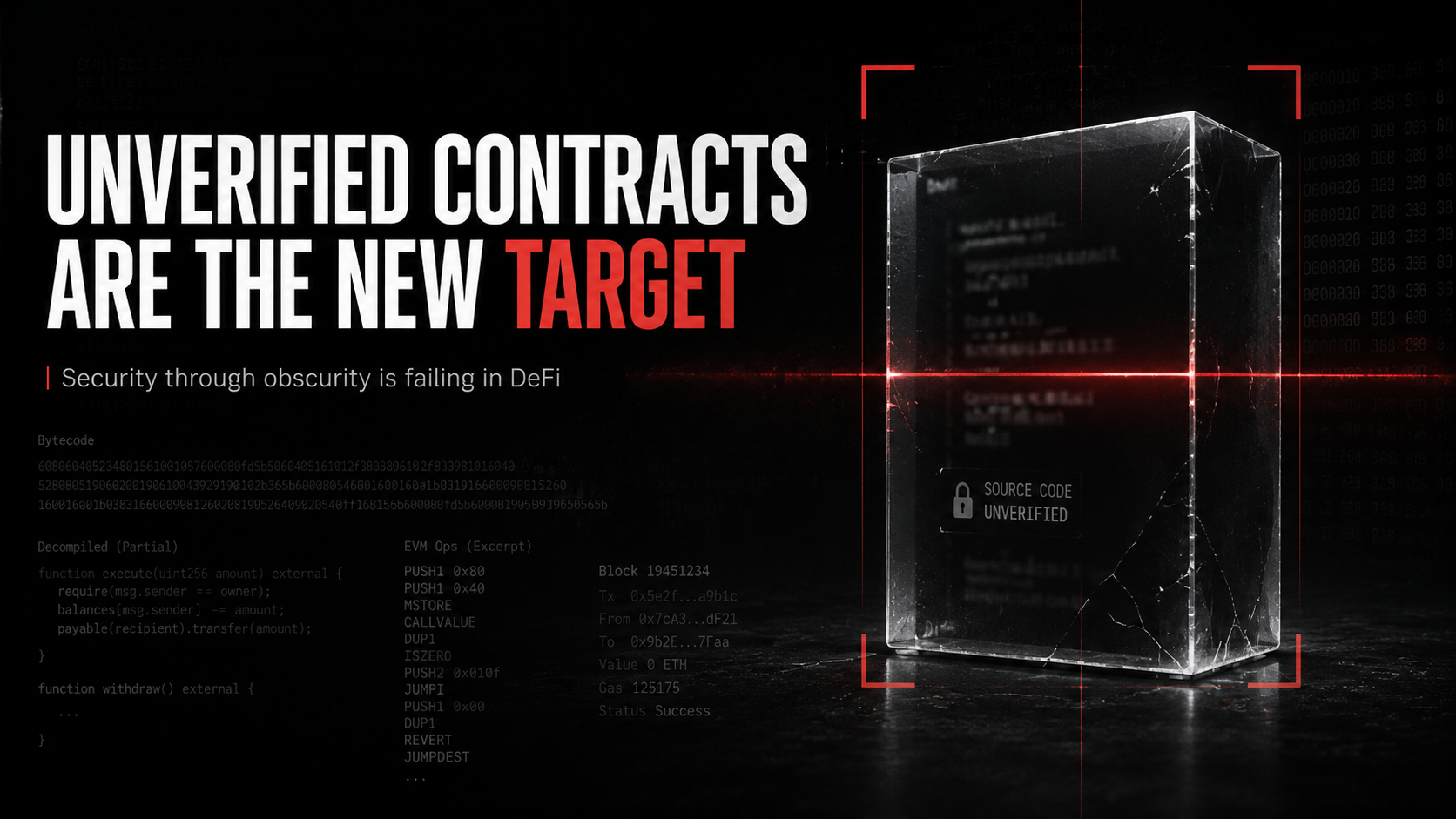
A coordinated pattern of attacks targeting unverified smart contracts has led to the theft of at least $36.7 million across four separate DeFi protocols since January. The largest single loss was sustained by Truebit, an Ethereum-based project, which lost $26.2 million from an exploit of a contract that had remained unverified since its deployment in 2021. The other protocols compromised in this series of incidents were Trusted Volumes, Aperture Finance, and Ekubo.
The common feature across all four exploits was the target: a smart contract whose source code was not publicly available on a block explorer. This strategy of withholding code, often under the assumption of protecting intellectual property or gaining security through obscurity, is now being systematically defeated. Analysis indicates that advances in code decompilation and the application of artificial intelligence are enabling attackers to reverse-engineer contract bytecode efficiently, automating the discovery of vulnerabilities at scale.
Anatomy
The architectural failure lies in the deviation from the open source ethos that underpins much of DeFi security. A verified smart contract on a platform like Etherscan provides a public, immutable link between the human-readable source code and the compiled bytecode operating on the blockchain. This transparency allows for a continuous, adversarial audit by the global security community. Independent researchers, bug bounty hunters, and automated analysis tools can freely scrutinise the logic for flaws.
In the case of Truebit and the other victims, this public verification layer was absent. The protocols operated with closed-source contracts controlling user funds. The Truebit attacker exploited an integer overflow vulnerability, a well-known and elementary class of bug. The flaw existed in a contract deployed three years prior, but because its code was opaque, it escaped the notice of public security analysts. The protocol’s security rested entirely on the diligence of its internal team and any private auditors they may have engaged.
The attacker did not require access to the original source code. Instead, they leveraged modern reverse-engineering tools to decompile the on-chain bytecode back into a low-level, but analysable, representation. AI models can accelerate this process significantly by assisting in pattern recognition, identifying common vulnerability signatures like integer overflows, and reconstructing the contract’s logic. Once the flaw was identified, crafting a transaction to trigger the overflow and drain the contract’s funds was a straightforward matter. The obscurity of the code did not prevent the exploit; it only prevented its discovery and remediation by benevolent actors.
Pattern
This trend marks the definitive failure of 'security through obscurity' as a viable defence in the high-stakes DeFi environment. While the concept has long been discredited in traditional information security, some protocol developers have persisted in the belief that hiding their code provides a competitive or security advantage. This assumption is now being invalidated by the very technological progress it sought to ignore. What once required a highly skilled reverse engineer spending days or weeks on a single contract can now be partially automated and deployed across thousands of unverified contracts simultaneously.
These incidents do not exist in a vacuum. They are a direct consequence of the powerful economic incentives created by the wider landscape of DeFi exploits. The theft of over $629 million in April alone, dominated by the KelpDAO and Drift Protocol incidents, provides enormous capital for attacker syndicates to fund research and development. This R&D is clearly focused on developing novel techniques and scaling up existing ones. The systematic targeting of unverified contracts is a logical evolution, moving from high-profile, complex targets to a broader, more vulnerable class of previously overlooked assets.
The response from the market is already visible. Following major exploits, protocols are re-evaluating their core infrastructure. Solv Protocol, for example, initiated a migration to Chainlink's Cross-Chain Interoperability Protocol (CCIP) after its own internal security reviews, signalling a flight to more battle-tested and transparent standards. The current attacks will accelerate this trend, forcing projects to choose between radical transparency and being marked as a potential target.
Forward Implication
Any protocol operating with unverified smart contracts controlling significant value is now a designated target. Malicious actors are actively scanning their code, and the perceived safety of obscurity has evaporated. A short-term increase in such exploits is likely as attackers race to capitalize on these vulnerabilities before developers can verify and patch their contracts.
This will likely trigger a structural shift in risk assessment and due diligence. Insurance underwriters, audit firms, and institutional investors will almost certainly begin to treat unverified contracts as an unacceptable liability. Public source code verification is poised to become a non-negotiable prerequisite for securing insurance coverage, passing an audit, or receiving investment. Any protocol that resists this standard will be signalling a high risk profile, whether intentional or not.
The immediate fallout exposes a critical blind spot in the ecosystem. The Truebit contract was a legacy component from 2021, a digital time bomb left ticking on-chain. This raises the urgent question of how many other unverified contracts, deployed years ago and since forgotten, still hold custody over millions of dollars in user funds. A systematic, forensic search for these legacy systems by security firms and white hats is now an operational imperative.
---
Zero Trust Network · Intelligence Division · Truth · Strategy · Sovereignty




Discussion