The Bet Under The Bet
Read pMINT as a leveraged social wrapper on pDAI conviction, not as free yield. Then decide whether that is a feature or a warning.
THORchain is offline. The entire network was halted by its operators after an attacker drained roughly $10.8 million from its liquidity pools on May 15th. All swaps, deposits, and withdrawals are frozen. The theft hit native assets from Bitcoin, Ethereum, BNB Chain, and Base, and the protocol's RUNE
The moment crypto threatened the system, taxation became the leash... and most men put the collar straight back on.
Modern crypto promised decentralization, yet much of the industry now bends under pressure. From Tornado Cash sanctions to halted chains and curated frontends, this deep dive explores why immutable systems like PulseChain may represent the next true evolution of blockchain sovereignty.
For years, stablecoins existed in a strange parallel world. Billions of dollars moved across blockchains every single day, yet most of the infrastructure lived outside the traditional banking system. Regulators circled it cautiously. Governments studied it quietly behind closed doors. Banks largely
Seven hundred million dollars went dark on a Sunday, on purpose. Not after a hack, but moments before a suspected state-sponsored crew could drain the system. The protocol is Tydro, the dominant application on the Ink Layer 2 network. Its defensive shutdown shows how fragile even mature digital capi
Anchorage Digital is preparing to onboard roughly twenty banks and technology corporations as stablecoin issuers, consolidating the post-GENIUS Act market into a single federally chartered chokepoint. The firm has reportedly secured every meaningful issuance mandate awarded inside the United States
There’s a quiet shift happening beneath the surface of Bitcoin. It isn’t loud, it isn’t dramatic, and it doesn’t arrive with the usual headlines people expect when something truly fundamental is being rewritten. It creeps in through technical proposals, framed as safety, framed as progress, framed a
There is a moment most people miss when they first look at how blockchains actually work. They see validators, they see rewards, they see the surface level idea of decentralisation, and they assume consensus is something that naturally emerges from honest participation. It doesn’t. It is engineered,
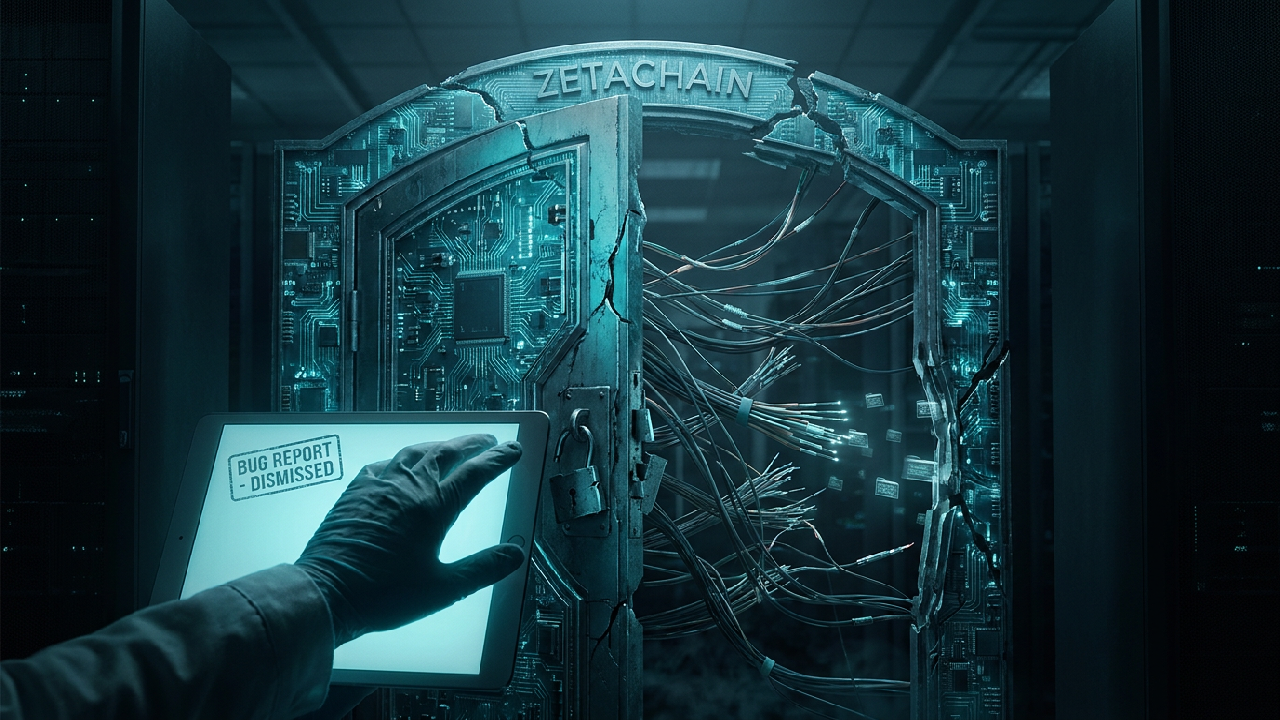
ZetaChain recently suffered a $334,000 exploit targeting its cross-chain gateway contract, an incident that was entirely preventable. The vulnerability used to drain funds across Ethereum, Arbitrum, Base, and BSC had been previously flagged by a researcher through the project’s bug bounty program. H
The recent activity across the scaling landscape reveals a widening gap between the marketing of decentralised finance and the reality of administrative control. In the most significant event, the Arbitrum Security Council intervened to freeze over 30,000 ETH following an exploit on KelpDAO. While t
The USDC liquidity pool on Aave V3 Ethereum Core has reached a state of total exhaustion, with utilisation pinned at 99.87 percent for four consecutive days. Following the KelpDAO exploit on 18 April, the pool has effectively ceased to function as a liquid market. Currently, 1.89 billion dollars in